
The 16 Days of Activism against Gender-Based Violence is an annual international campaign that starts on 25 November, the International Day for the Elimination of Violence against Women, and runs until 10 December, Human Rights Day.
What would make you ask more questions?
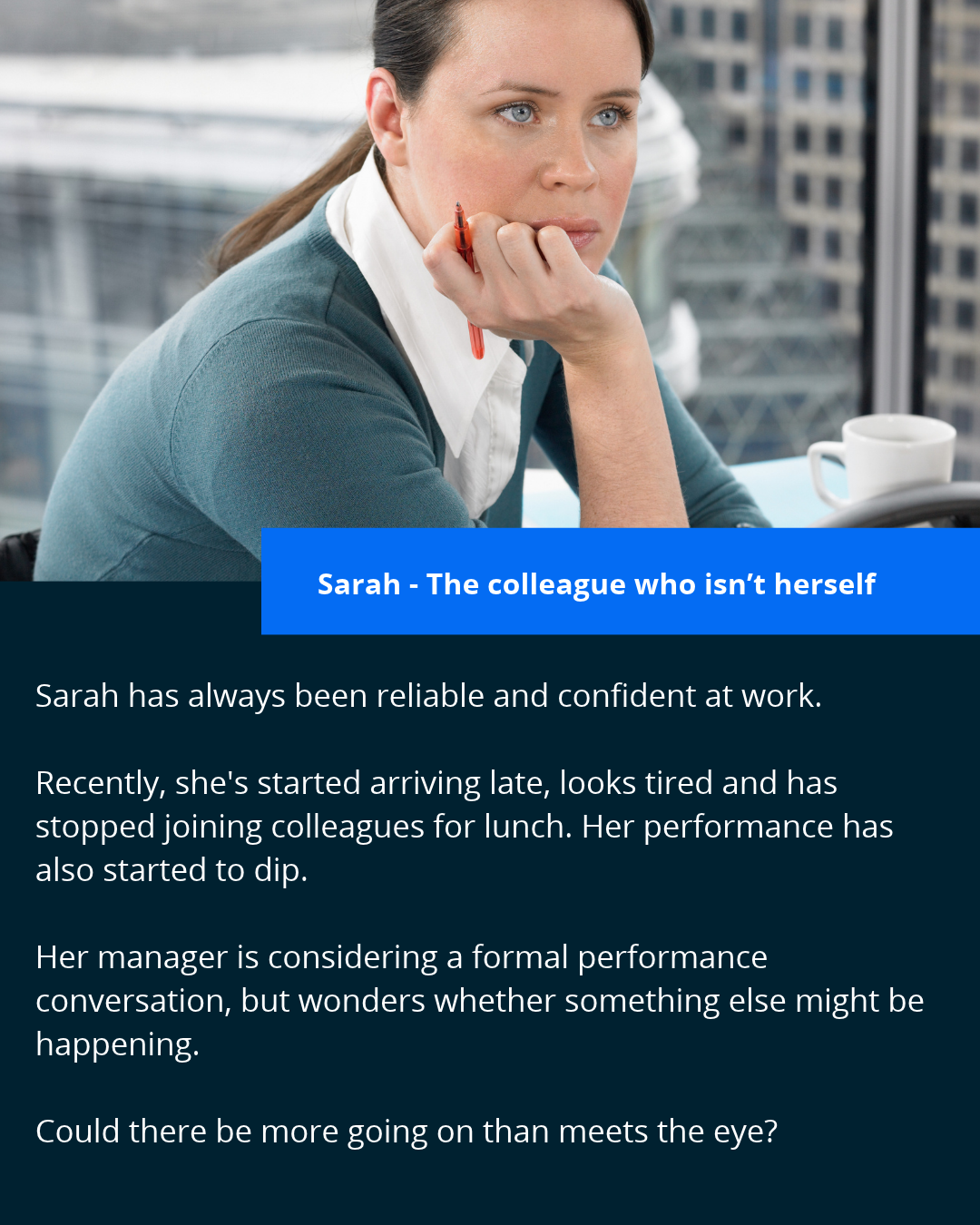
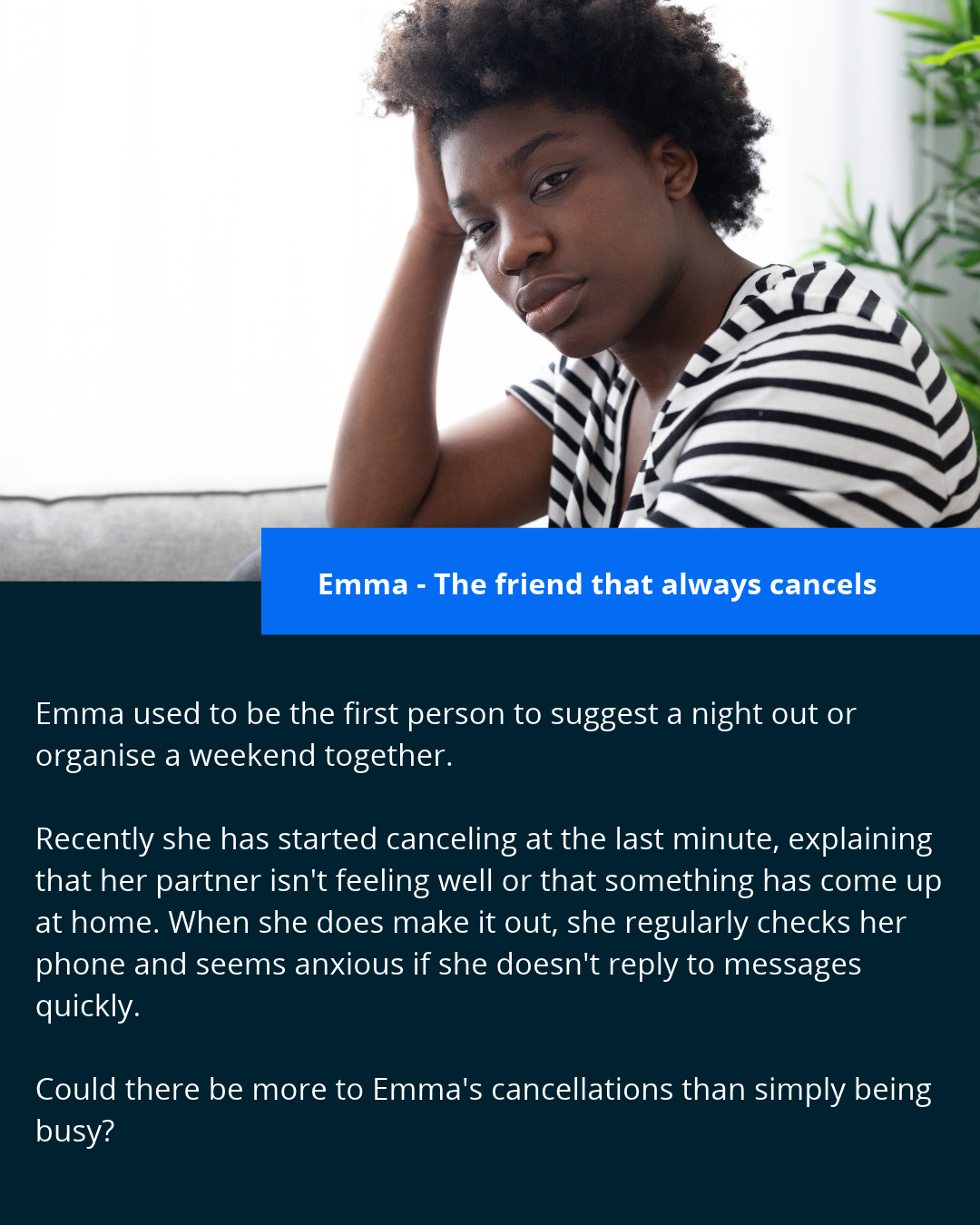
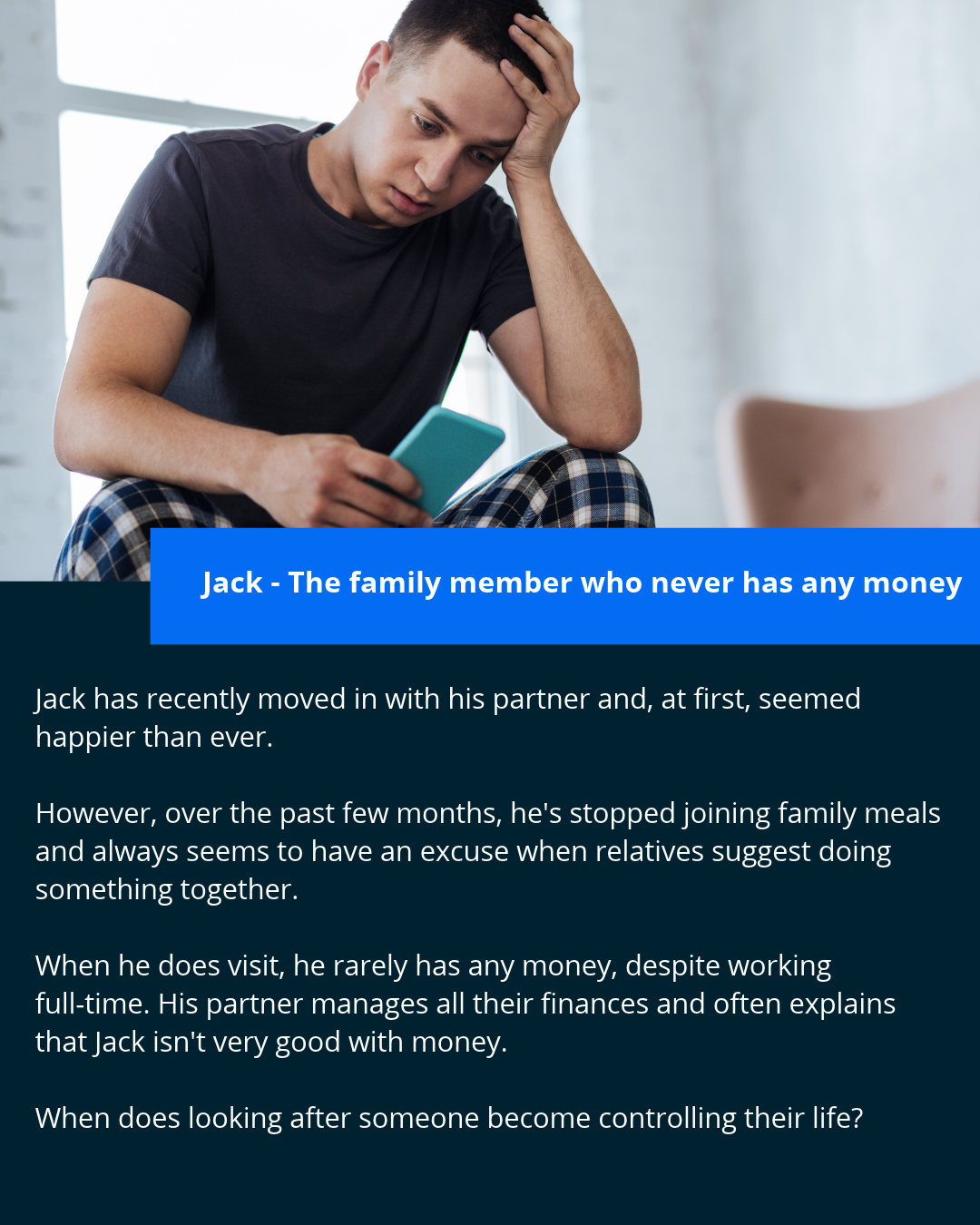
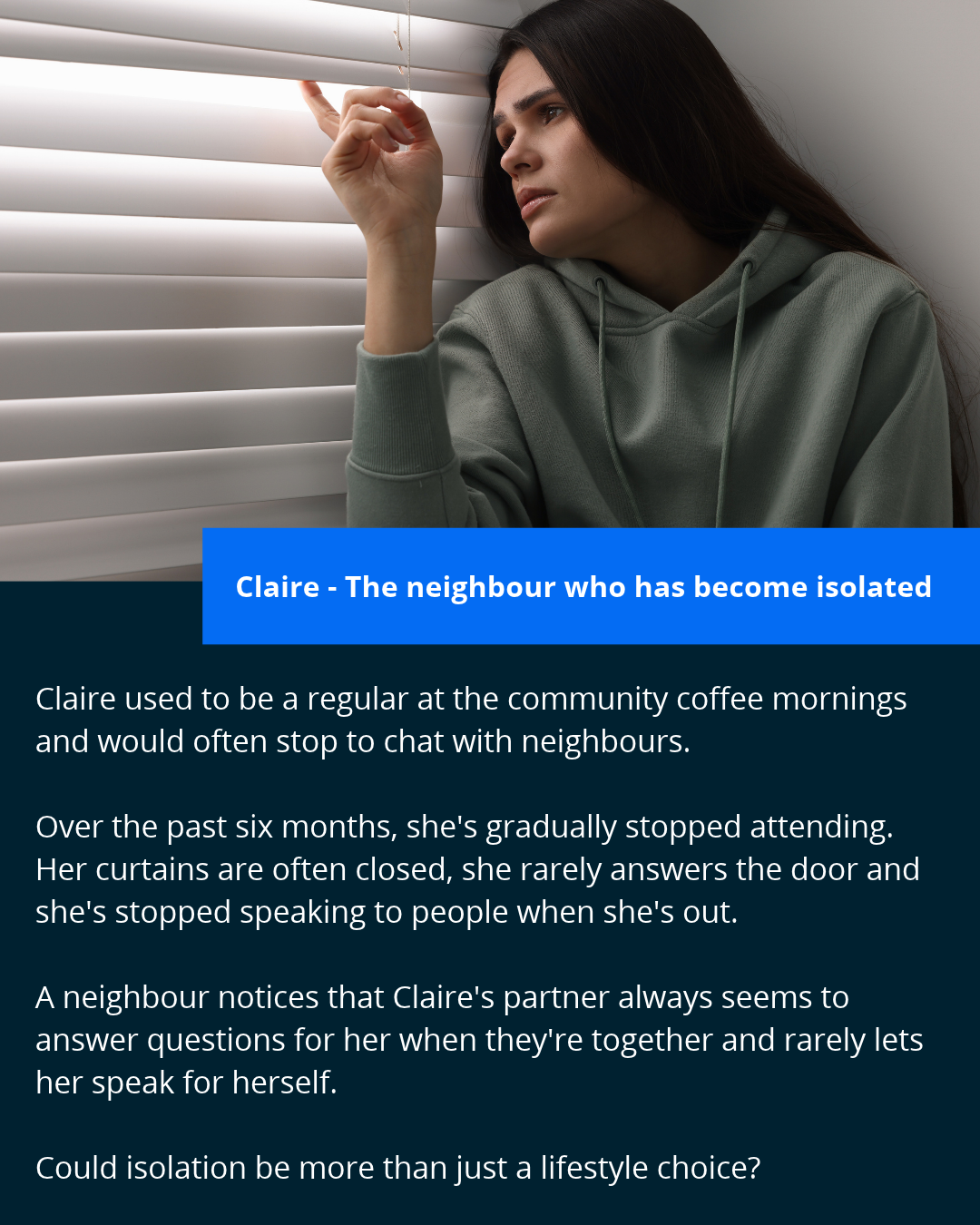
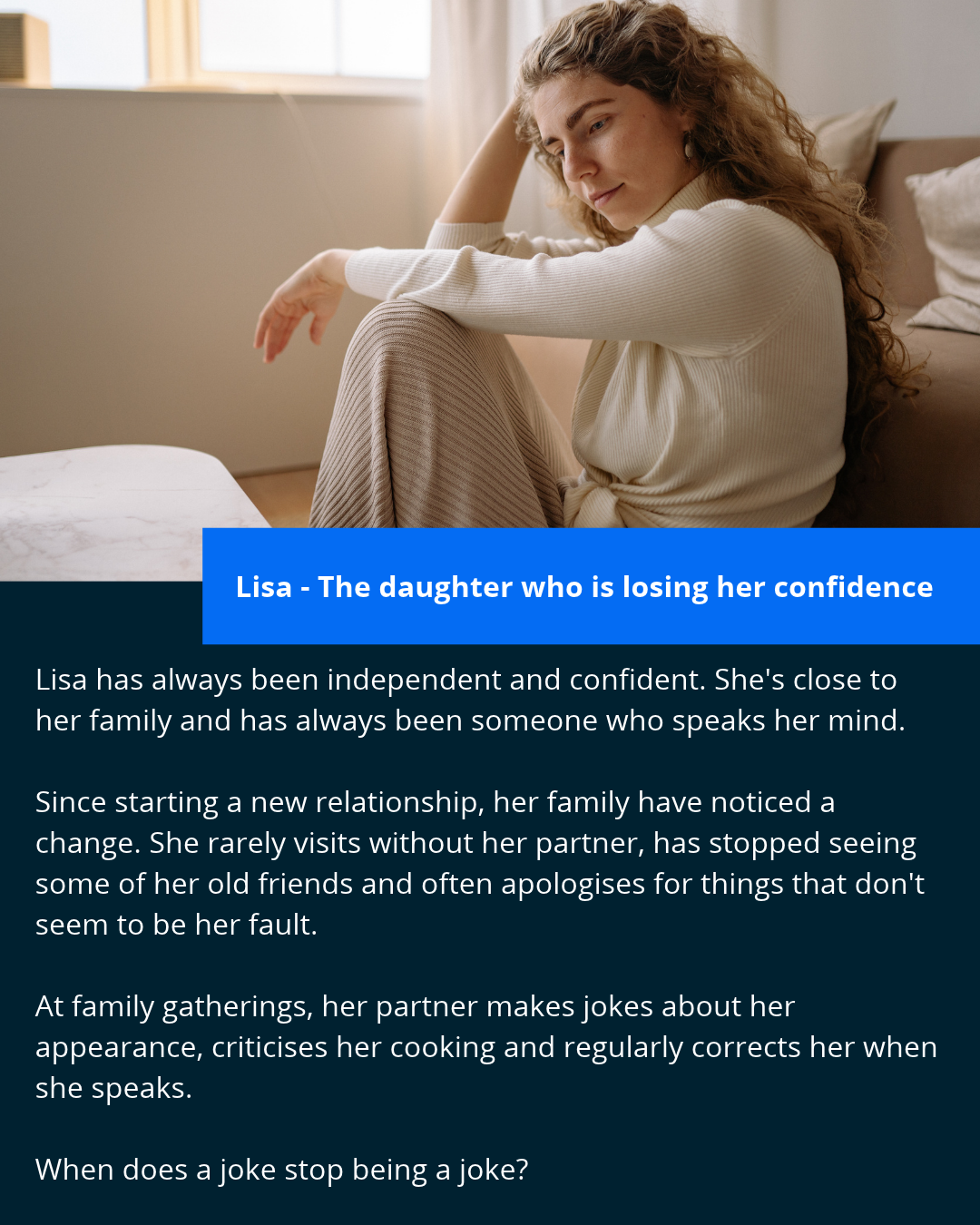
Below we’ve put together some fictional scenarios showing how domestic abuse can affect people in different ways. The scenarios are about noticing changes and patterns, rather than making assumptions.
It might be a colleague whose behaviour has changed, a friend who has become increasingly isolated, a family member who no longer seems to have control over their finances, or someone whose confidence has slowly disappeared.
Abuse can happen to anyone, regardless of their age, gender or background.
We all have a part to play in recognising the signs, challenging harmful behaviours and creating communities where people feel safe to speak up.
You don’t need to have all the answers. Sometimes, listening without judgement and letting someone know you’re there is a good place to start.
If you or someone you know is experiencing domestic abuse, support is available.
National Domestic Abuse Helpline: 0808 2000 247 (freephone, 24 hours).
Neurodivergence and domestic abuse: The link that we can’t ignore
An article published by Clinical Partners in November 2025 explores the link between neurodivergence and an increased risk of experiencing domestic abuse.
This research shows the importance of support for women and girls who are neurodivergent. This means better education around the signs of domestic abuse and inclusive interventions.
Data from the National Centre for domestic violence says that in the year ending March 2025, 3.8 million people ages 16 and over were victims of domestic abuse. This breaks down to approximatively 2.2 million women and 1.5 million men. Every 30 seconds a domestic abuse related call is made to the police, but less then one-in-five survivors report it abuse. Domestic Abuse Statistics UK – NCDV
A study completed in 2019, by Autism Research The Vulnerability Experiences Quotient (VEQ): A Study of Vulnerability, Mental Health and Life Satisfaction in Autistic Adults – Griffiths – 2019 – Autism Research – Wiley Online Library highlights that across all forms of domestic abuse, neurodivergent adults were roughly two to three times more likely to experience abuse from a partner compared to neurotypical adults.
What could explain the link?
Research published in Autism in Adulthood (volume 1, Issue2) shared that autistic women, found it harder to interpret social situations, and generally reported having more difficult friendship/relationship experiences than neurotypical women. This was especially true in terms of social and sexual experiences, where autistic women reported that they were much more vulnerable to exploitation than neurotypical women. Friends and Lovers: The Relationships of Autistic and Neurotypical Women – Felicity Sedgewick, Laura Crane, Vivian Hill, Elizabeth Pellicano, 2019
Participants stressed that they had trouble identifying behaviour in a partner that was wrong despite knowing that it made them uncomfortable. Recognising domestic abuse can be a challenge for anyone but, with an emphasis on needing to understand complex cycles of behaviour and coercive control, this can be especially difficult for those with neurodevelopmental conditions.
What can be done?
Alongside efforts to raise awareness and create resources for those experiencing domestic violence across the population, a focus on education and supporting those with neurodevelopmental conditions is key to reducing risk in this group.
Open conversations about what grooming, coercive control, and early signs of abusive behaviour look like are essential for helping people to identify them in their own relationships.
You can read the full article with links to all of the research mentioned in this article here Neurodivergence and domestic abuse: The link that we can’t ignore | Clinical Partners

Written by Lauren Eden