
If you let us know about your communication preferences, support needs or any reasonable adjustments you require, we’ll record this on your account so our teams can access the information when they need it. This means you shouldn’t have to repeat the same information every time you contact us, helping us provide a more personalised and consistent service.
If your needs change, simply let us know, and we’ll update your record.
You can tell us about any preferences, needs or adjustments by completing our survey here.
Every month, we will be sharing cases and outcomes to highlight what we are doing with the information you tell us.

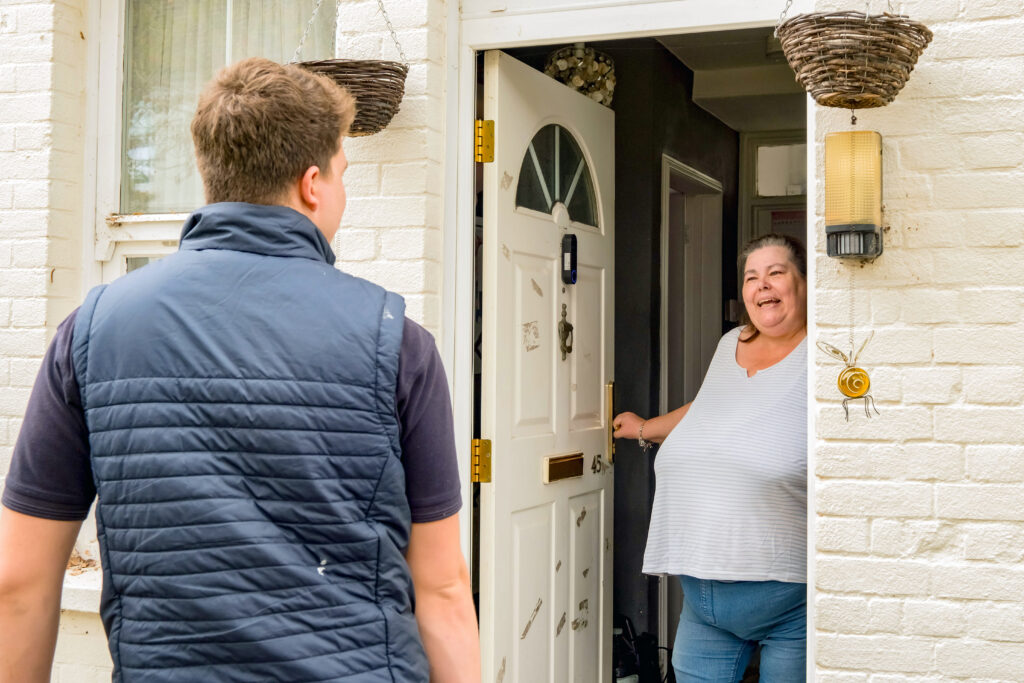
Claire (pictured here) is our resident data officer. She might get in touch with you to collect some information so we can keep our records accurate. This helps make sure our systems and team members understand any support, adjustments, or changes you need.
Here is an overview of what you told us in November
Communication and appointment support
During a recent conversation with a resident, they told us that the medication they take can affect their memory. They told us, that they rely on support from a friend to help manage appointments and arrange access to their home.
The resident explained that receiving written confirmation after a telephone conversation helps them remember the purpose of the appointment, what work has been agreed, and what areas of the the home will require access.
This reduces the risk of confusion and ensures they are able to arrange appropriate support to be prepared for our visit, and not surprised when team members attend.
Person-centred repairs and communication
A resident shared that two people living in the home are autistic and experience significant anxiety around unexpected visitors, unfamiliar people in their home, and loud noises. The resident also explained that the homes wired doorbell caused distress and could trigger sensory overwhelm.
We wanted to ensure that we understood the needs of the household. We discussed with the resident in detail what adjustments we could make. This included preferences for planned appointments, advance notice of visits, identification of attending team members where possible, allowing additional time to answer the door, and consideration of sensory sensitivities.
After the resident identified the doorbell as a significant source of distress, our Repairs and Electrical teams explored what options we could offer the resident. In line with the resident’s preferences above, communication was completed via email. A decision was made to disconnect the doorbell, and the resident was informed about the attending team member in advance, and efforts were made to minimise anxiety by planning the visit and setting expectations beforehand.
This demonstrates a proactive, person-centred approach, involving collaboration between teams to remove a source of ongoing distress, implement practical reasonable adjustments, and ensure services are delivered in a way that is accessible and supportive of the resident’s individual needs.
Reasonable adjustment for a respiratory health condition
A resident told us their respiratory health condition can be adversely affected by periods without heating and by exposure to certain substances used during repair visits. The resident explained that prolonged boiler outages, lengthy repair times, and uncertainty around repair appointments can have a negative impact on their health and wellbeing.
To ensure these needs were understood and appropriately supported, reasonable adjustment information was recorded on the resident’s profile. This included identifying boiler-related repairs as a priority, due to the potential impact that a loss of heating or hot water could have on the resident’s medical condition.
The resident also advised that aerosol sprays can adversely affect their breathing. In response, instructions were added to their profile requesting that aerosol products are not used within the home wherever possible.
Where the use of an aerosol spray is unavoidable, advance notice must be provided to enable the resident to make any necessary arrangements to protect their health.
Building trust
When talking to a resident, we became aware that the previous expierences they have had with us affected their confidence in contacting us to ask questions and raise concerns.
Rather than directing the resident to multiple teams, information was gathered on their behalf from across the organisation and provided in a clear written format covering tenancy matters, communal services, home improvement requests, and communication arrangements. This ensured the resident had accurate information in one place and felt supported throughout the process.
The resident’s communication preferences were also recorded, including the need for advance notice of appointments, information about proposed works, and sufficient time to arrange support for visits. These adjustments help ensure future services are delivered in a way that best meets their needs.
This demonstrates the importance of listening to residents, removing barriers to engagement, and taking ownership of concerns to improve trust and accessibility.
Improving home accessability
A resident explained to us their difficulties managing within parts of the home due to arthritis. The resident said that the kitchen felt restrictive and difficult to manoeuvre around, which was impacting their day-to-day. Information and advice were provided regarding a self-referral to the Occupational Therapy team to enable a specialist assessment of the resident’s needs, and to explore any recommendations that could support independent living.
Further discussion identified additional concerns relating to the home environment. Rather than addressing these concerns in isolation, a coordinated approach was taken to review previous repairs, understand the resident’s current circumstances, and identify appropriate solutions.
In recognition of the resident’s health conditions, the home was also recorded as having a priority need relating to heating and hot water services. This ensures that any future boiler or heating failures are considered in the context of the resident’s wellbeing and potential impact on their health.
This outcome demonstrates a person-centred approach by listening to the resident’s individual circumstances, addressing practical barriers within the home, considering longer-term adaptations, and ensuring appropriate priority measures are in place to support the resident’s health, safety, and independence.

Written by Lauren Eden